

—August 19, 2024
Today, few believe in the future of 3D printing in construction. This is likely because we are traditionalists in our environment, where brick and mortar are still the most commonly used materials. Nevertheless, researchers around the world are trying to bring already well-established 3D printers into construction to simplify and reduce the cost of building various structures. Construction is rapidly transforming, mainly on the wings of digitalization. According to predictions, in a decade and a half, almost half of the value chain in this industry will move away from traditional processes.
What is 3D printing?
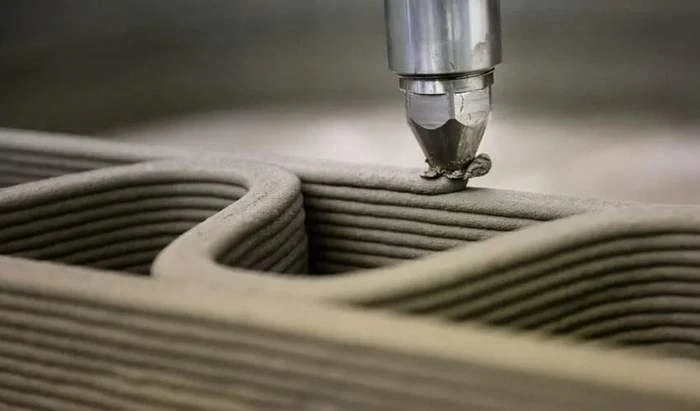
3D printing represents a revolutionary technology that allows the creation of three-dimensional objects by adding material layer by layer. It enables the rapid production of complex and customised structures directly on the construction site, offering numerous advantages over traditional methods. The technology of 3D printing in construction already brings many benefits, such as cost reduction, faster project execution, and a smaller environmental footprint. The inventor of the 3D printing process in construction is considered to be American William Urschel. In 1939, with his device, a simple turntable, a lever with a dosing device on the central axis, of course without a computer, he built a round concrete building that still stands today.
Traditional construction vs. 3D printing
| Feature | Traditional construction | 3D printing |
|---|---|---|
| Materials and methods | Brick, mortar, manual labour | Advanced materials (e.g. special concrete mixtures), additive manufacturing |
| Speed | Slow construction due to multiple phases of drying and curing | Faster construction due to the continuous printing process |
| Costs | Higher costs due to long duration and large amount of labour | Lower long-term costs due to reduced need for labour and materials |
| Flexibility | Limited flexibility in designing complex structures | High flexibility and precision in creating complex and customised structures |
| Sustainability | Lots of waste, high energy consumption | Less waste, lower energy consumption, possibility of using sustainable materials |
| Initial costs | Lower initial costs | High initial costs for setting up infrastructure |
| Usage | Suitable for various types of construction projects | Currently limited usage, technology still in development |
| Regulatory barriers | Compliant with existing building regulations and standards | Building regulations and standards are not yet fully adapted |
Advantages and disadvantages of 3D printing
Advantages:
—Speed: Enables fast construction and shortens project timelines.
—Sustainability: Use of sustainable materials and reduction of construction waste.
—Flexibility and design: 3D printing allows the creation of complex and customised structures.
—Economical: Despite high initial costs, it reduces costs in the long term due to the reduced need for labour and materials.
Disadvantages:
—High initial costs: Setting up the infrastructure for 3D printing is expensive.
—Limited usage: The technology is still in development and not suitable for all types of construction projects.
—Regulatory barriers: Building regulations and standards are not yet fully adapted to 3D printing technology.
Example of 3D printed construction
Construction with 3D printing up to the fourth construction phase is cheaper than traditional construction, which means we can expect the expansion of 3D printing among builders. A good example is the planned construction of an entire housing estate by the American company Icon. Icon, highlighted as one of the new practices on ArchDaily in 2021, has gained international recognition for pioneering large-scale 3D printing. The company has developed various construction systems and completed several projects demonstrating the capabilities of this new technology. Among them is a collaboration with BIG and Lennar, which led to a community of 100 3D printed homes in Texas, as well as an ongoing research project with NASA for developing autonomous construction technologies to create structures on the Moon and even Mars.
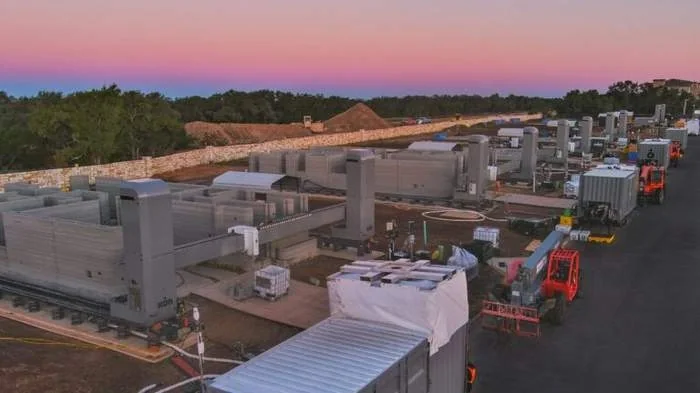
BIG and ICON have designed 100 3D-printed homes for a community in Texas.
Conclusion
3D printing in construction has great potential to transform the industry. Indeed, it is possible to print a residential house more cheaply with 3D printing, but since just printing a house is not enough, 3D printing is still quite expensive compared to traditional construction. With the further development of 3D printers and the introduction of improved technologies, the number of 3D printer operators will decrease, but even now 3D printers do not need more than 3-5 people to operate them. It is expected that the technology of 3D printing in construction will continue to advance in the coming years. Potential applications include printing entire cities or using 3D printers in space to build living units on other planets.