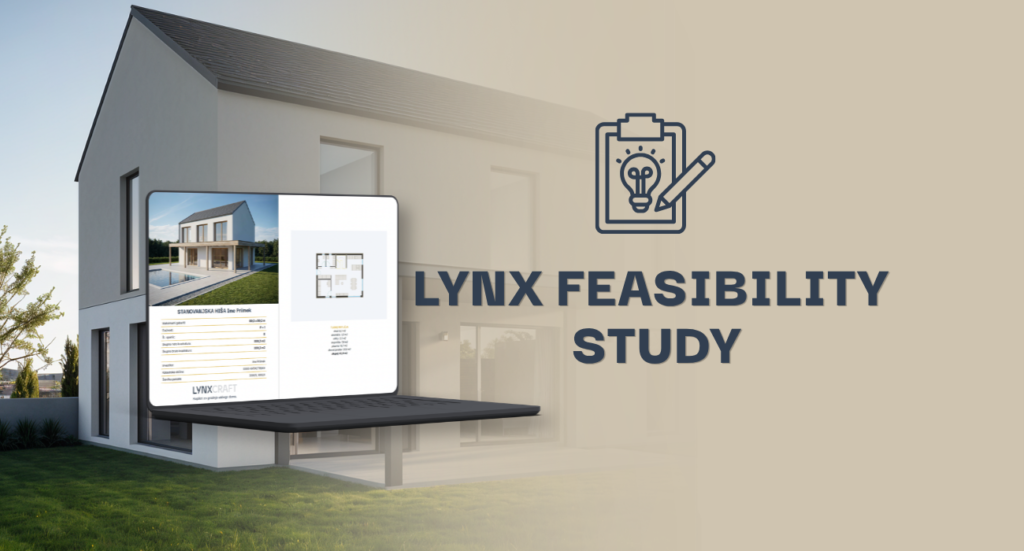
Lynx feasibility study: What the private real estate investor gets in the first phase of building
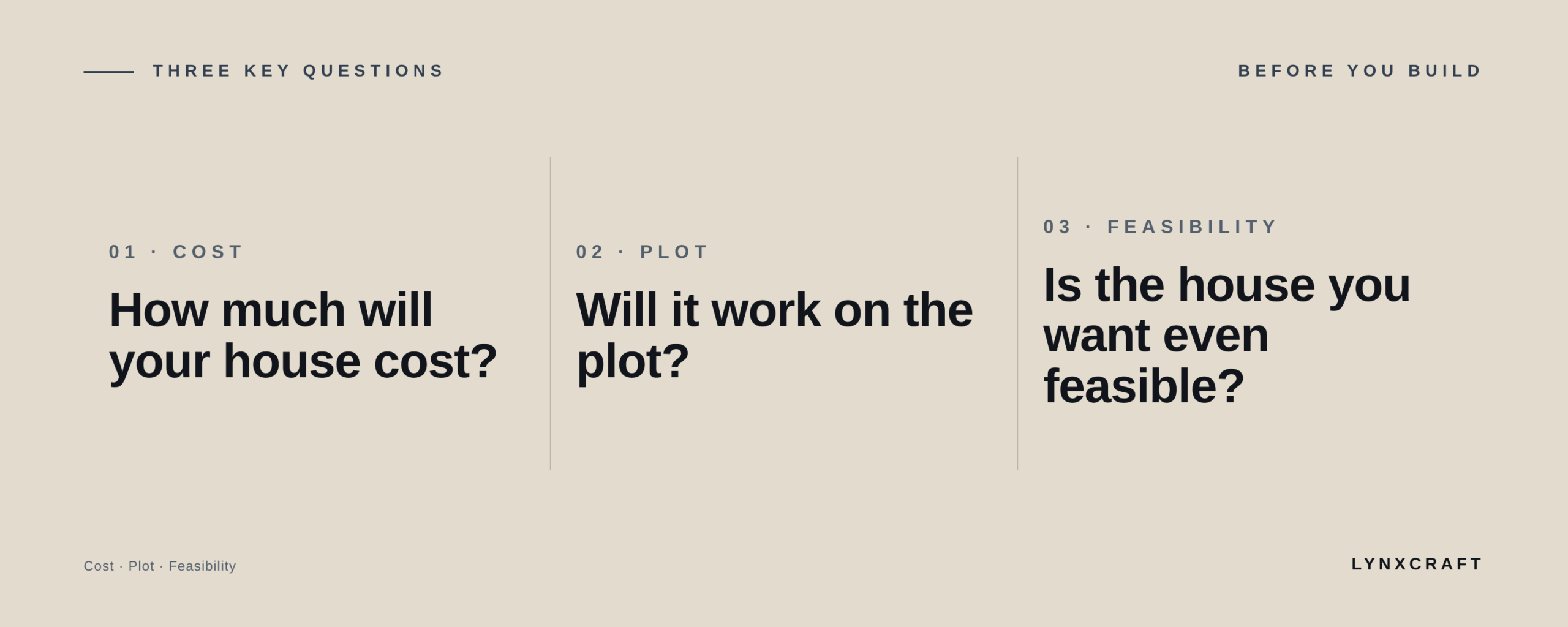
How much will your house cost? Will it work on the plot? Is the house you want even feasible at all?
These are the three critical questions you, as a private real estate investor, need answered before you start building your home. What the kitchen island will look like, what colour the façade will be, where the timber elements will sit – these are secondary. You will work through them with your architect in the next phase, once you know that the home you want is actually feasible in the form you envisage.
The goal of the first phase is not to design the house. It is to verify whether the house you want can actually be built – on this plot, and within the budget you have available.
This distinction is critical for you, the private real estate investor, if the project is to run to plan and your build is not to confirm the statistics. On average, private investor projects run a third longer than planned, and four out of five exceed budget – by an average of a quarter (25%) of the total investment. Most of these overruns do not come from construction itself, but from decisions made too late. The Lynx feasibility study exists so that those corrections never have to be made.
What you get with the Lynx feasibility study
You get a tangible result:
- the floor plan of a house that is genuinely feasible on your plot,
- a photorealistic 3D visualisation,
- a depiction of the house placed on the plot,
- and a comprehensive estimate of the total investment.
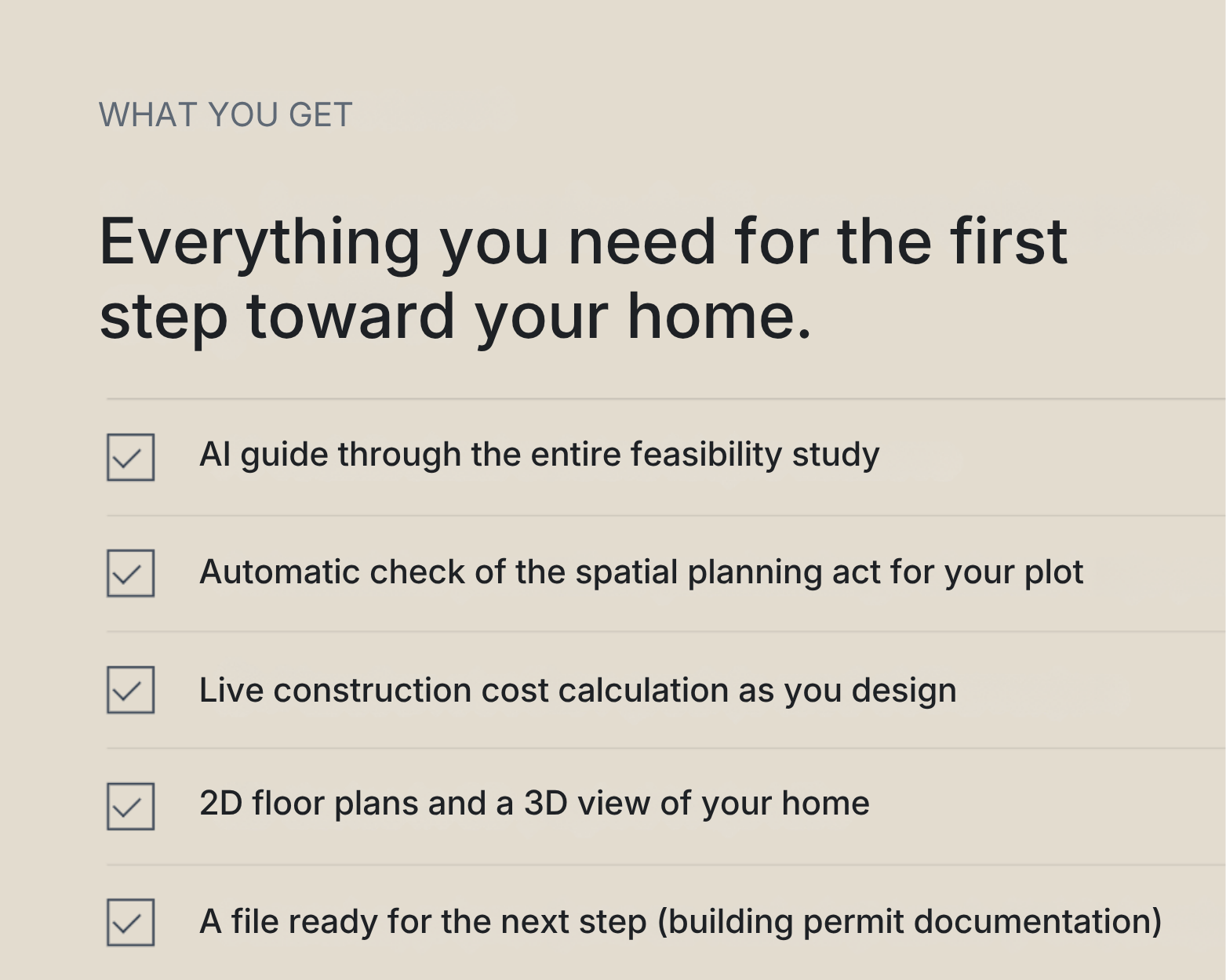
The Lynx feasibility study is a single document that brings together, in one place, all the information a private real estate investor needs to make the first serious decision about building. Specifically, you receive:
1. A house proposal tailored to your plot – dimensions, number of storeys, floor area, and bedroom count, aligned with the restrictions of the plot and with your wishes.
2. Floor plans, with the approximate area of every room.
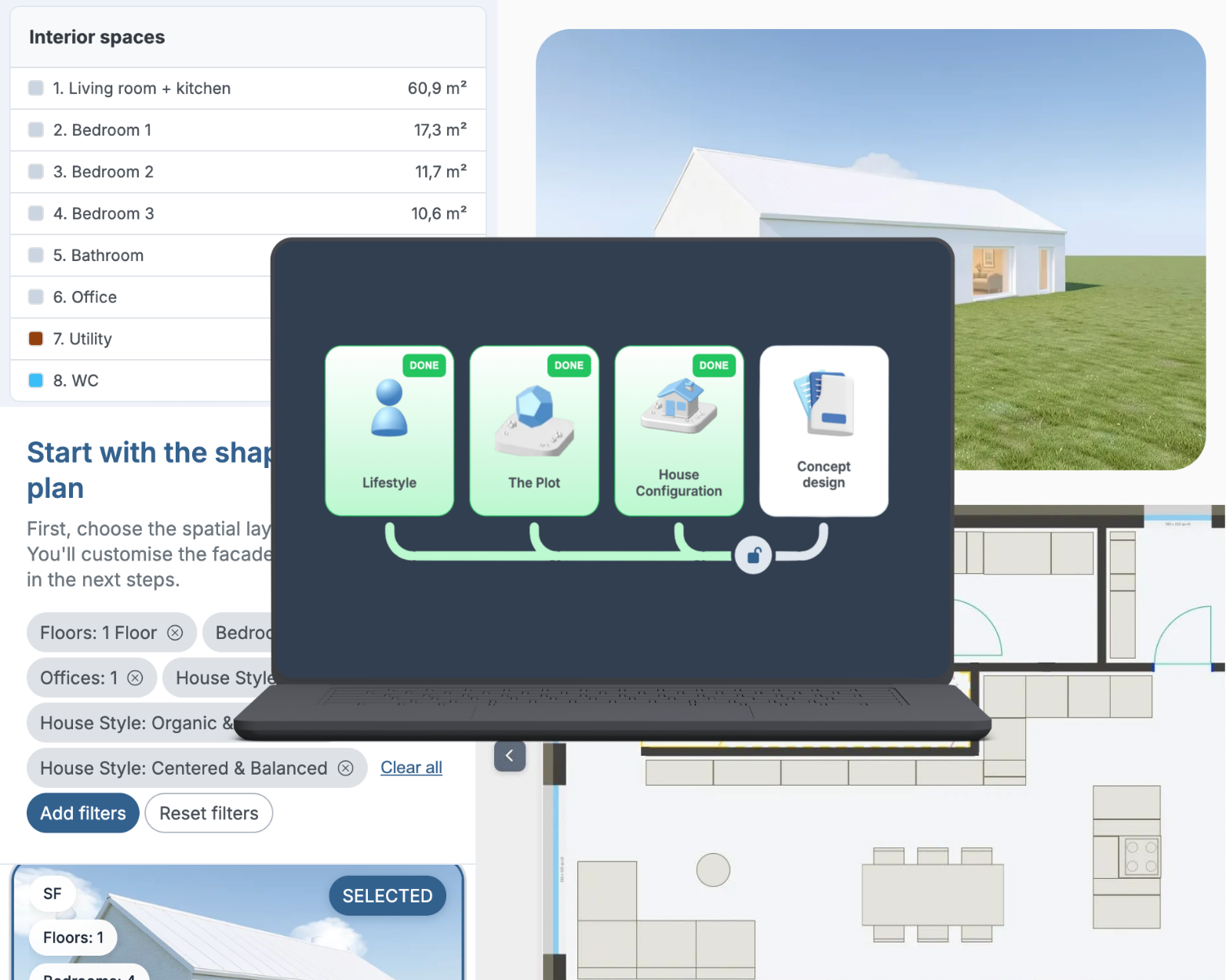
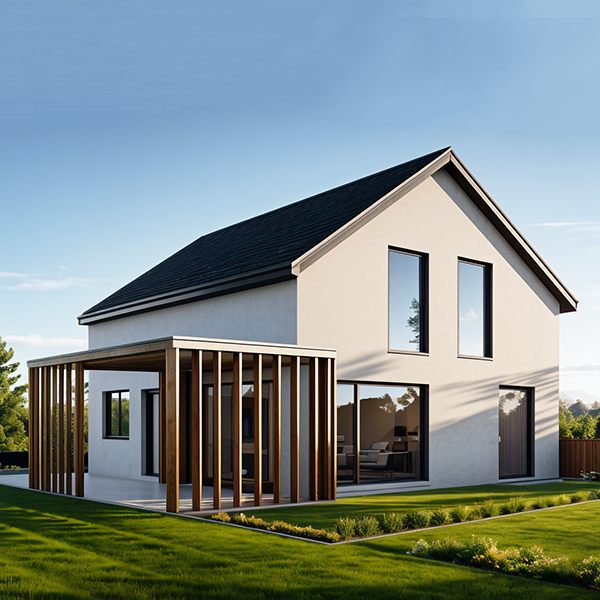
3. A photorealistic 3D visualisation of the building – you see the house before it is drawn, which lets you keep refining it in the next phase with your architect.
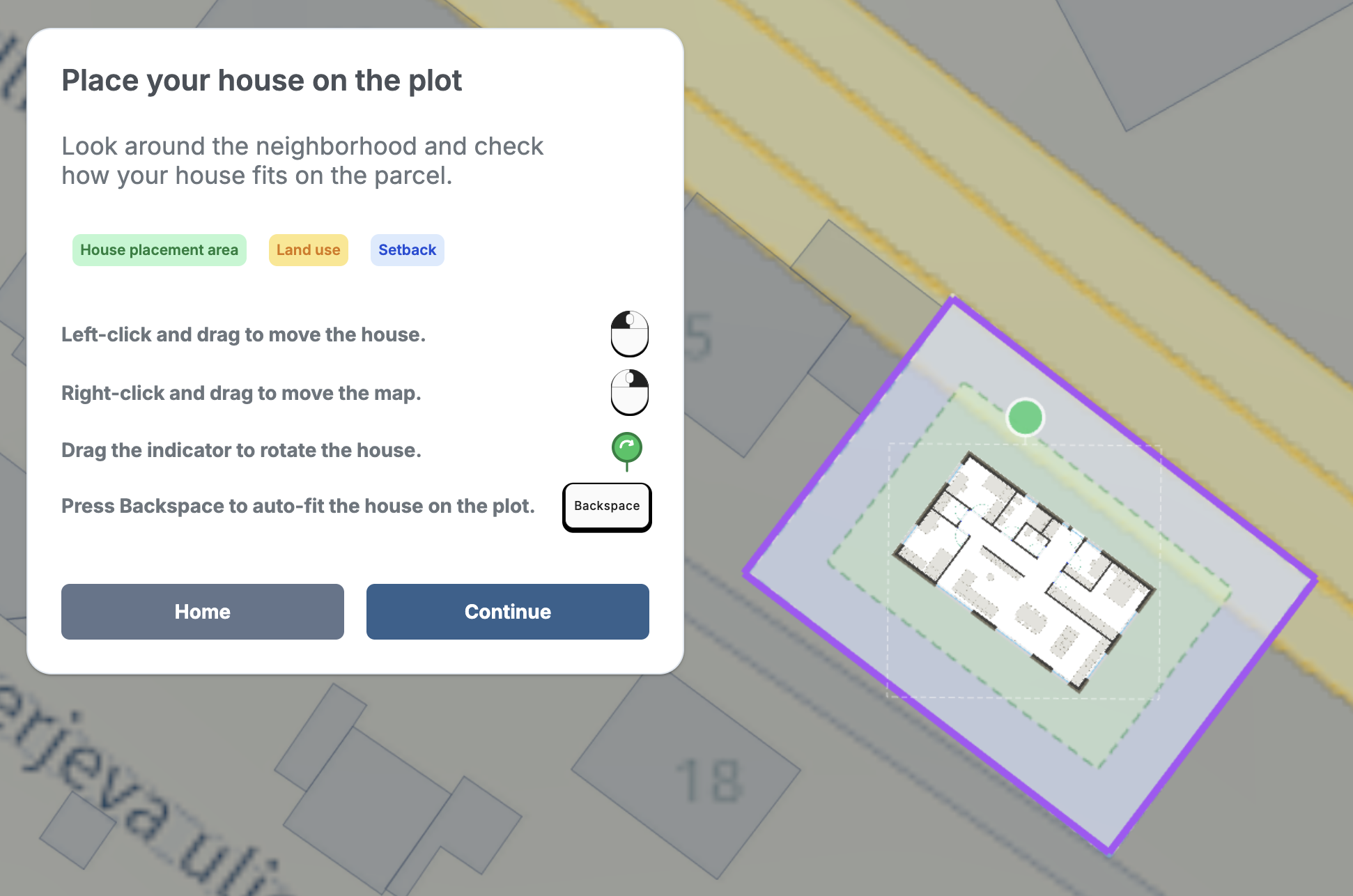
4. A depiction of the building placed on the plot, with setbacks, access, and orientation.
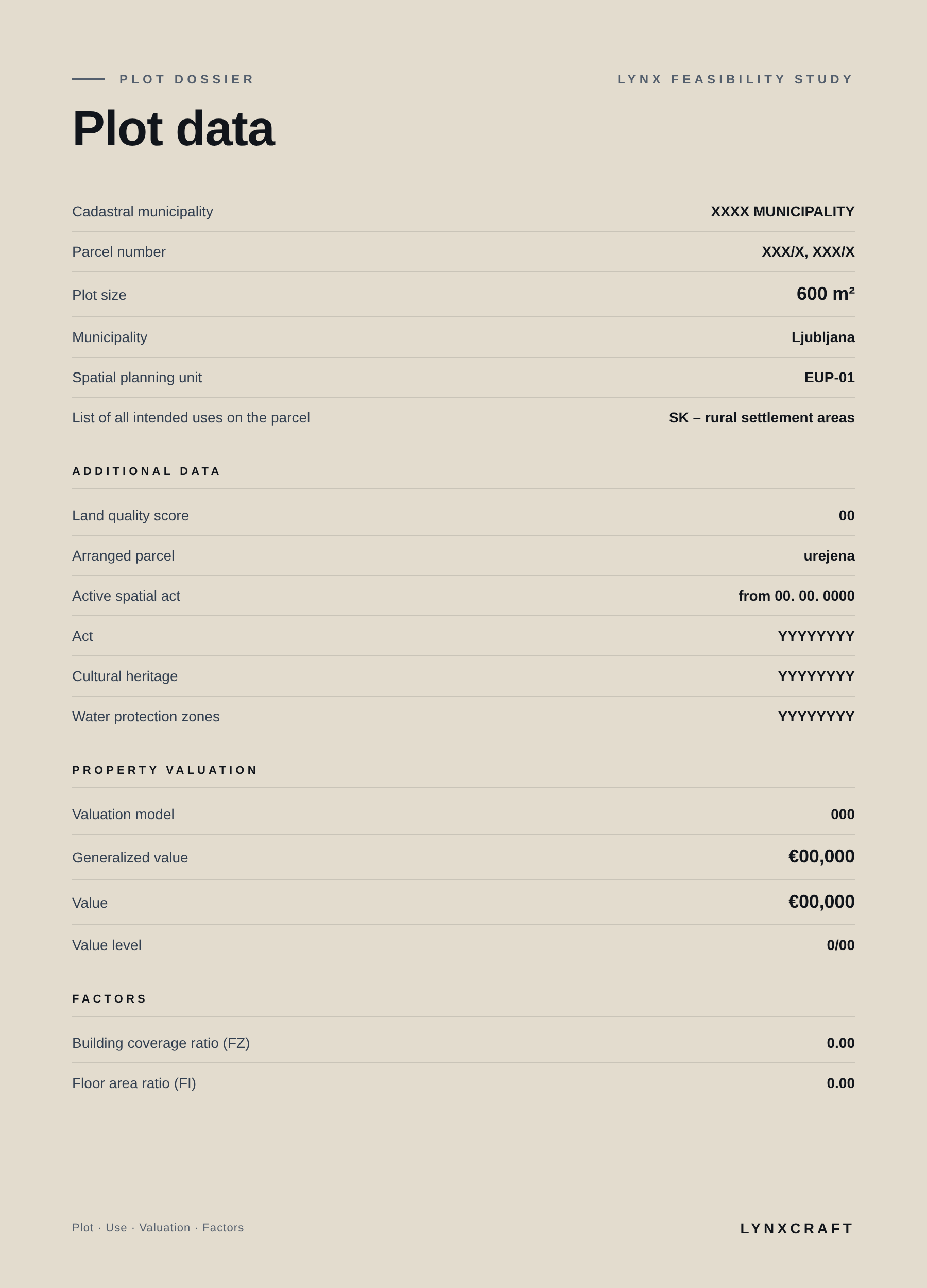
5. All official plot data in one place – land use designation, spatial planning act, built-up area and floor area ratios, water protection zones, cultural heritage, and generalised market value.
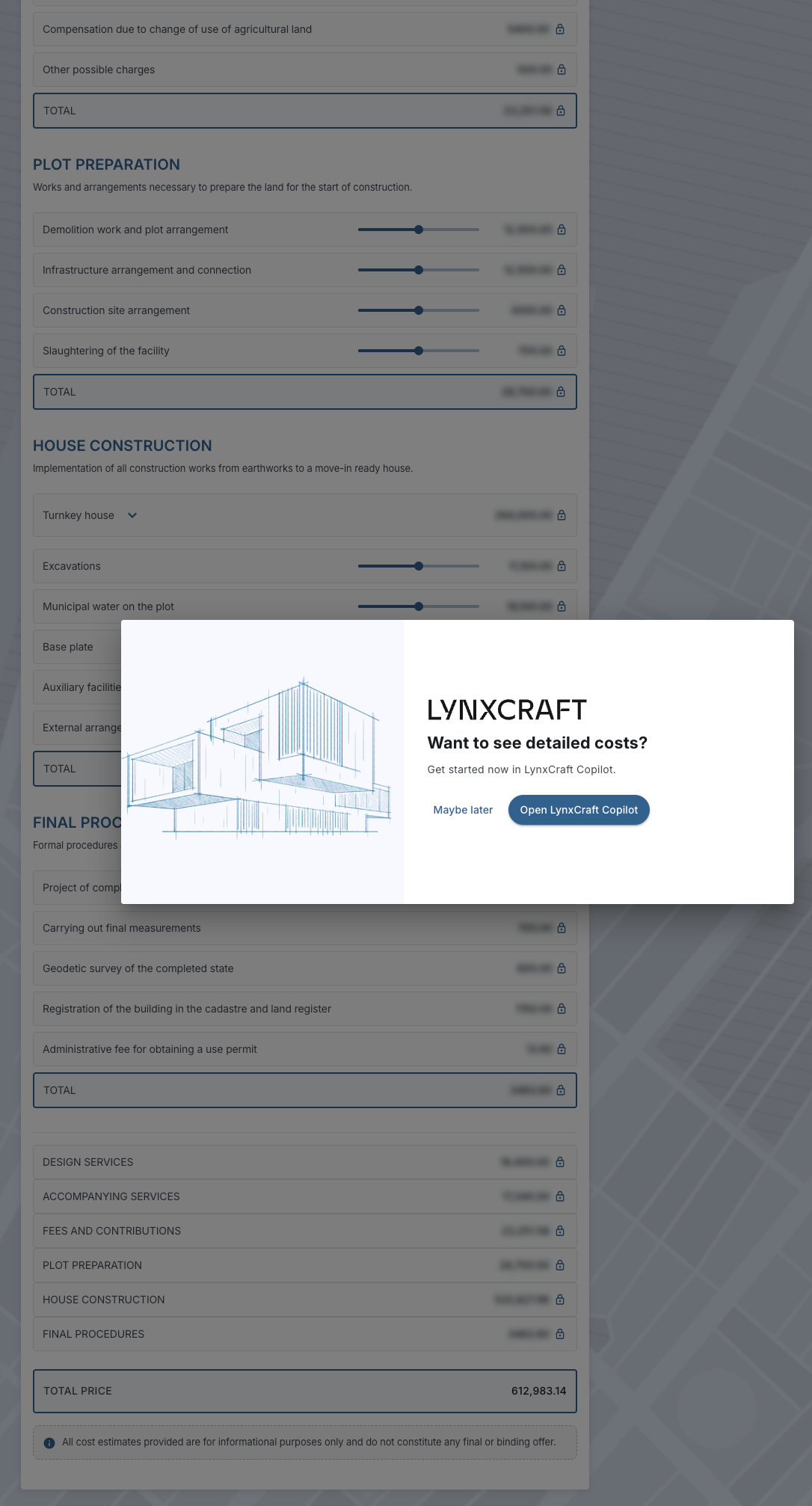
6. An itemised estimate of the total investment – from design services through to registration in the cadastre, across six sections and more than twenty-five line items.
7. An explanation of every cost – what it covers, why it arises, and which factors determine its amount.
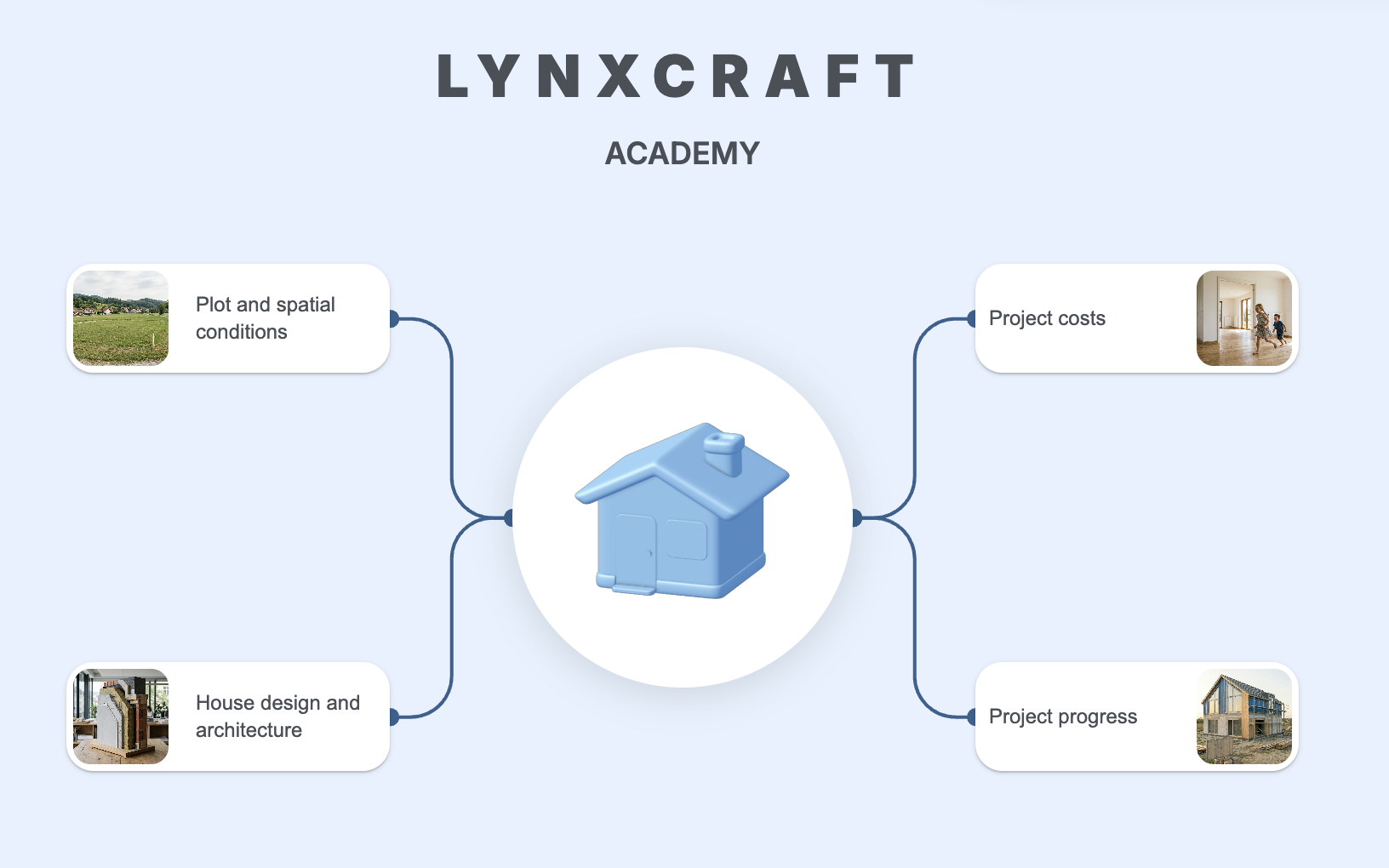
8. Extensive homebuilding knowledge from the LynxCraft Academy!
Why choose the Lynx feasibility study
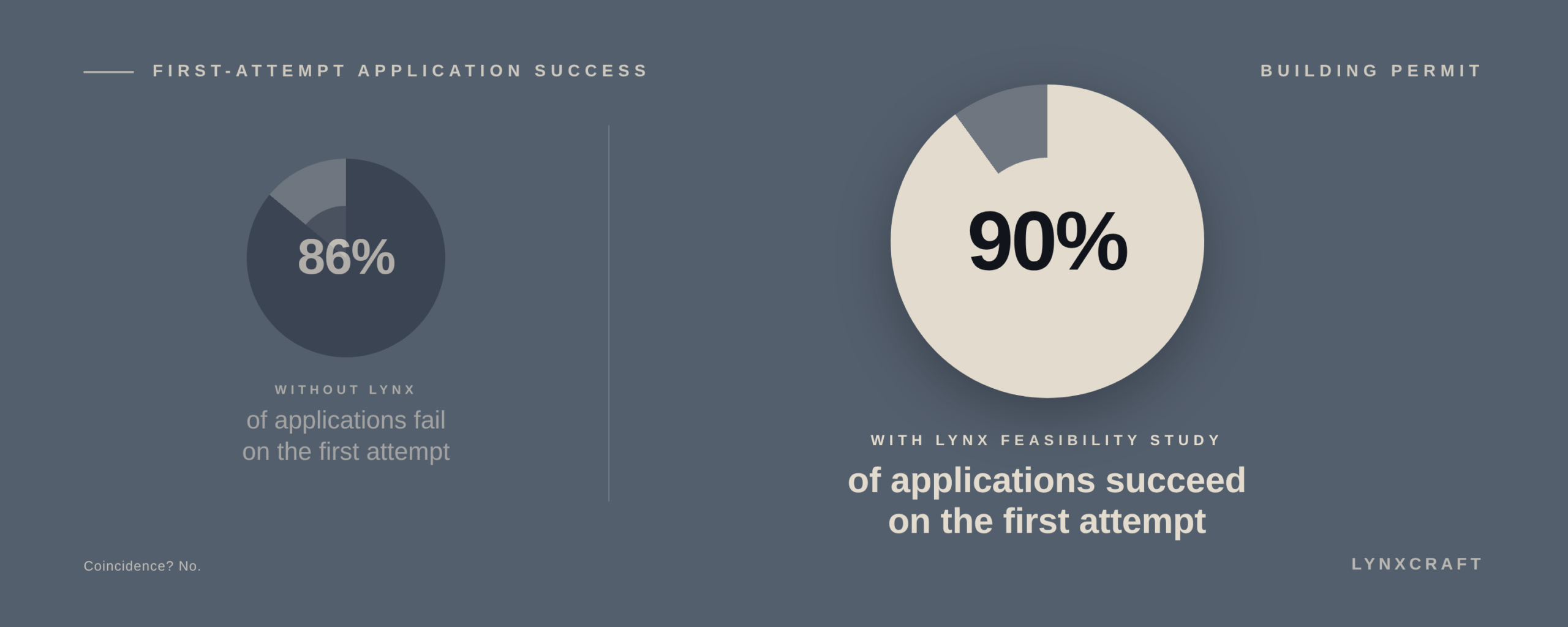
86% of all building permit applications for the construction of a home are unsuccessful on the first attempt.
By contrast, 90% of building permit applications for which the private investor first prepared a Lynx feasibility study are successful on the first attempt. Is that a coincidence?
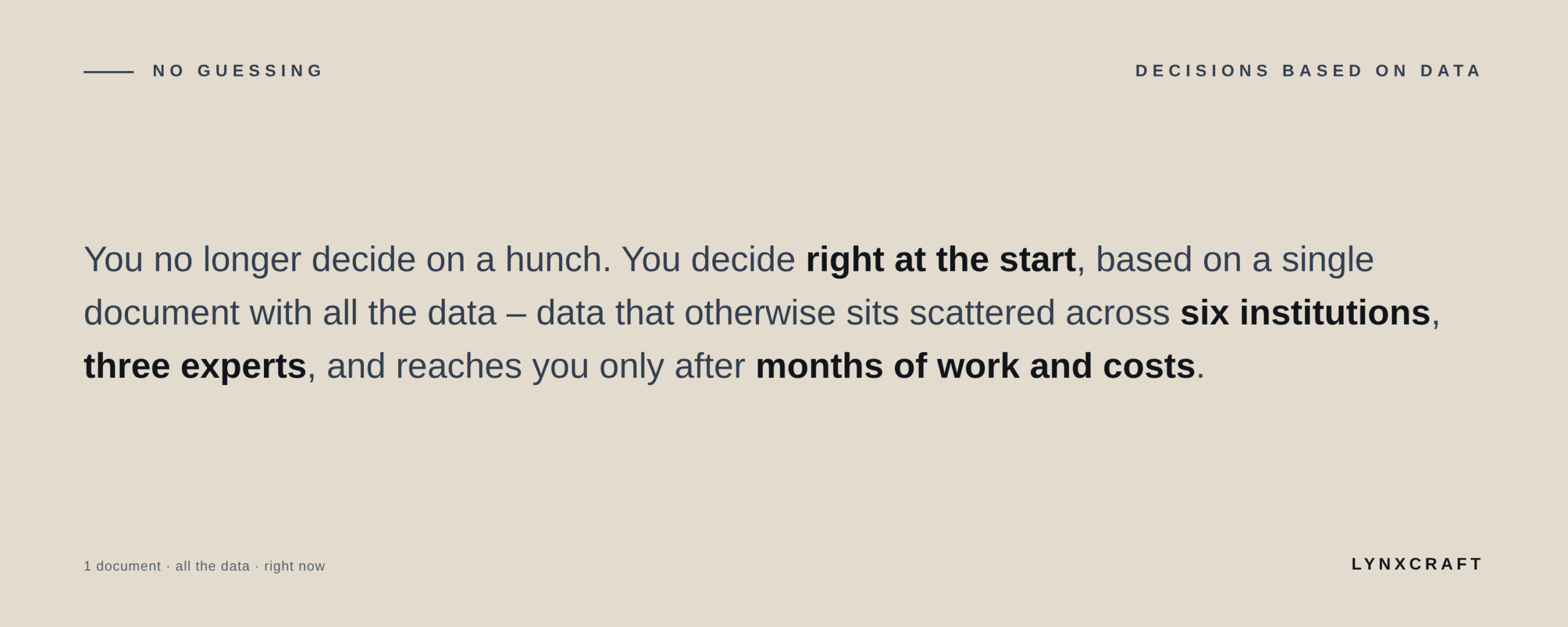
It consolidates every official piece of data about the plot into a single document. Based on the land use designation and the spatial planning unit, the Lynx Copilot checks the provisions of the spatial planning act – such as the built-up area and floor area ratios – and combines them with water protection zones and cultural heritage protection into one unified overview, before you ever begin to design.
A larger plot does not mean more freedom. Freedom is set by the spatial planning act, not by the size of the land.
You test variations in minutes, not weeks. This is the strongest advantage of the Lynx feasibility study. A smaller or larger floor plan, a different room layout, a different roof – every variation is checked immediately, each one against your budget and the spatial restrictions. What used to be decisions made on gut feeling become decisions made on data.
You see the house before it is drawn into the building permit documentation. The photorealistic 3D visualisation closes the gap between the professional and the layperson – you see the house with its volume, façade, roof pitch, and proportions to the plot at the point when you can still change your mind at no cost. Adjusting a visualisation is far easier than amending submitted building permit documentation, let alone a wall that has already been built.
You get the full investment estimate for the project, not just the construction cost. Architects typically do not prepare a comprehensive estimate – it is too complex. The Lynx feasibility study breaks the investment into six sections and more than twenty-five line items, with an explanation of every cost. With it, you go to the bank with a concrete figure, not an approximation. Only when you see the sum of all six sections do you know what your project actually costs. Not just construction – the entire project.
Ordering the feasibility study
For the private investor, the feasibility study is the cheapest way to avoid the most expensive mistakes. The Lynx Copilot prepares the feasibility study on the basis of your plot, your wishes, and official data – with a clear estimate of the total investment, from design services through to registration in the cadastre.