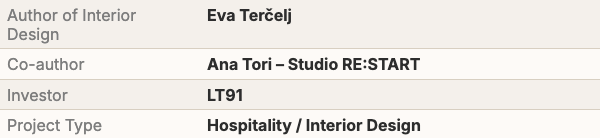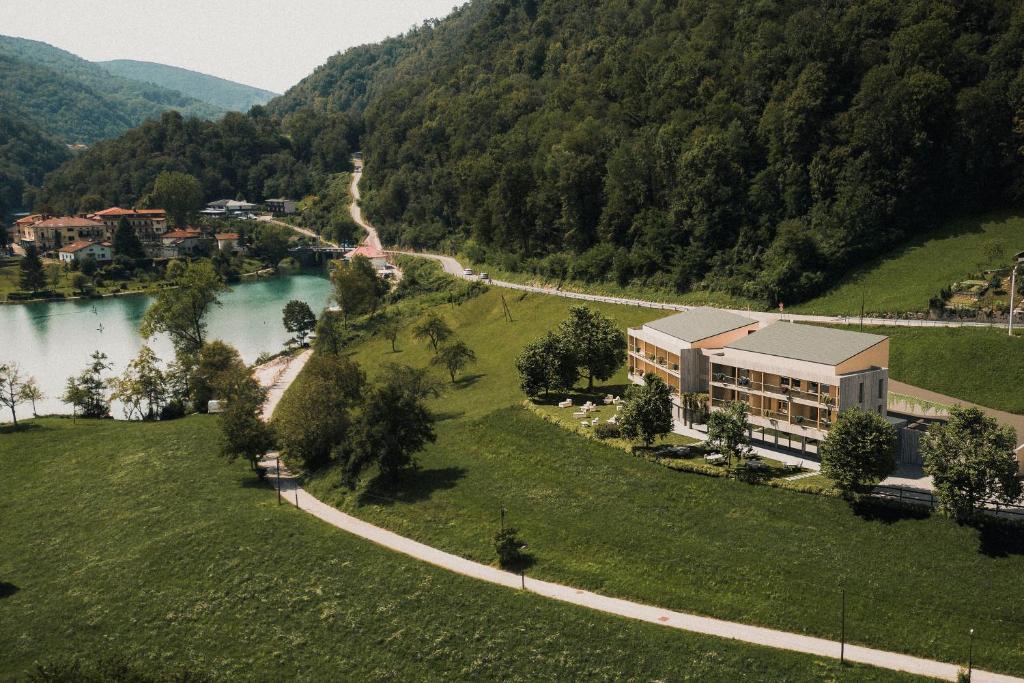
Hotel Tu’lie: From concept to interior
When we placed the project back on solid technical and financial foundations, a second story began to unfold in parallel – the one experienced by the guest from the inside.
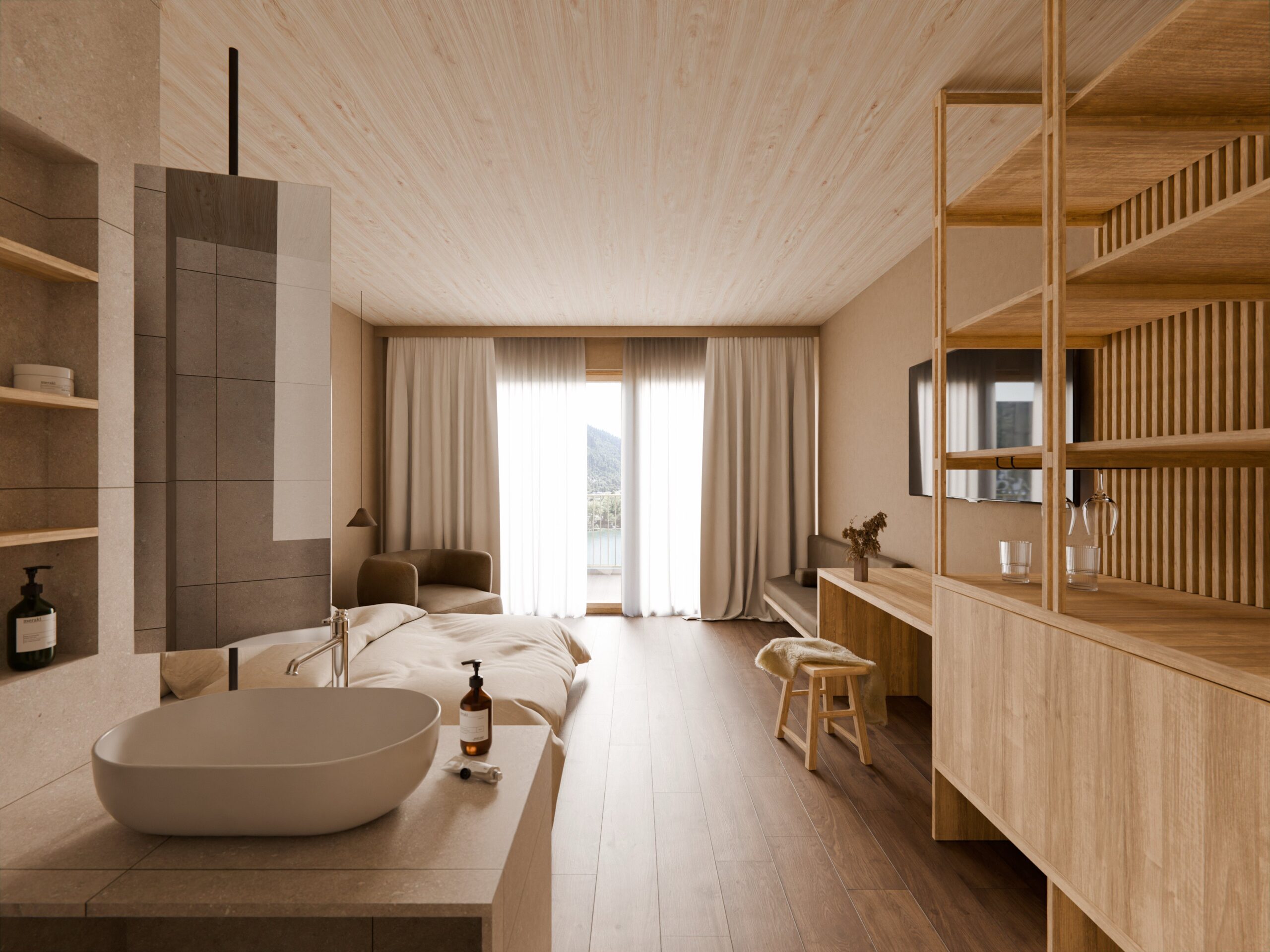
Premium room of Hotel Tu’lie – visualisation. Author: Jaka Kordiš.
PROJECT CONTEXT
First the structure, now the soul
In our previous project update, we described how LynxCraft, in close collaboration with the project investoR, the LT91 d.o.o. team, rescued Hotel Tu’lie from collapse. When LynxCraft team entered the Tu’lie story, the project’s situation was as follows:
- projected investment 30% over budget,
- a fragmented supply chain,
- and a project timeline that did not align with the financial structure.
Through methodical redesign of the construction, systematic management, and targeted restructuring of the supplier chain, we reduced costs by 30% and placed the project back on solid foundations – without significantly altering the original goals.
But a building is only a shell. Once the exterior was technically resolved, the interior began to take shape in parallel – a space that must tell its own story and fulfil the promise offered by its location on the Soca river. For this part of the project, the investor had a clear vision from the very beginning.
As two demanding processes ran in parallel – construction optimisation and interior development – coordination between teams was essential. The Lynx homebuilding co-pilot provided the investor with a unified overview of both: open issues, deadlines, and decisions were gathered in one place, not scattered across emails and meetings. At every moment, the investor knew exactly where the project stood – and what was coming next.
INVESTOR’S VISION
Warm, homely, local – what LT91 envisioned from day one
The interior of boutique Hotel Tu’lie stems from the investor’s vision to create a warm and homely ambience, closely connected to the local environment – a space that would reflect his values and a genuine relationship with and love for people, heritage, and the local surroundings.
In search of professional support to help develop and realise these ideas, the investor turned to architect Eva Tercelj, whose previous work he knew well. The investor’s trust provided a solid foundation for the project’s development. The interior was developed under Eva Tercelj’s leadership, in collaboration with architect Ana Tori (Studio RE:START), who specialises in hospitality architecture, with the concept and spatial solutions emerging through a shared development process.
A clear vision is the starting point. But when a project branches out among architects, contractors, and suppliers, that vision – without structure – quickly disperses into a series of disconnected decisions. The Lynx co-pilot ensures that every decision made by the investor, from material choice to deadline, immediately finds its place in the plan and budget.
CONCEPT DESIGN
Rural minimalism as the guiding concept
The concept is grounded in the principles of rural minimalism and sustainability, and in the thoughtful design and use of natural materials that together create a sense of warmth and homeliness. The interior draws from the local environment and interprets it in a subtle way – not merely respecting the context, but elevating it.
The interior colour palette is restrained, based on earthy tones and natural hues that subtly complement the textures of the materials. Particular emphasis is placed on detail and atmosphere – a space that encourages relaxation and the wellbeing of guests and visitors. Practicality and comfort are also central to the design, ensuring ease of use and maintenance.
Design decisions – such as material selection, furniture arrangement, and lighting – have direct cost implications. The Lynx co-pilot makes these implications visible before a decision is finalised. The investor does not learn of a budget overrun during construction; they see it at the moment when they can still choose.
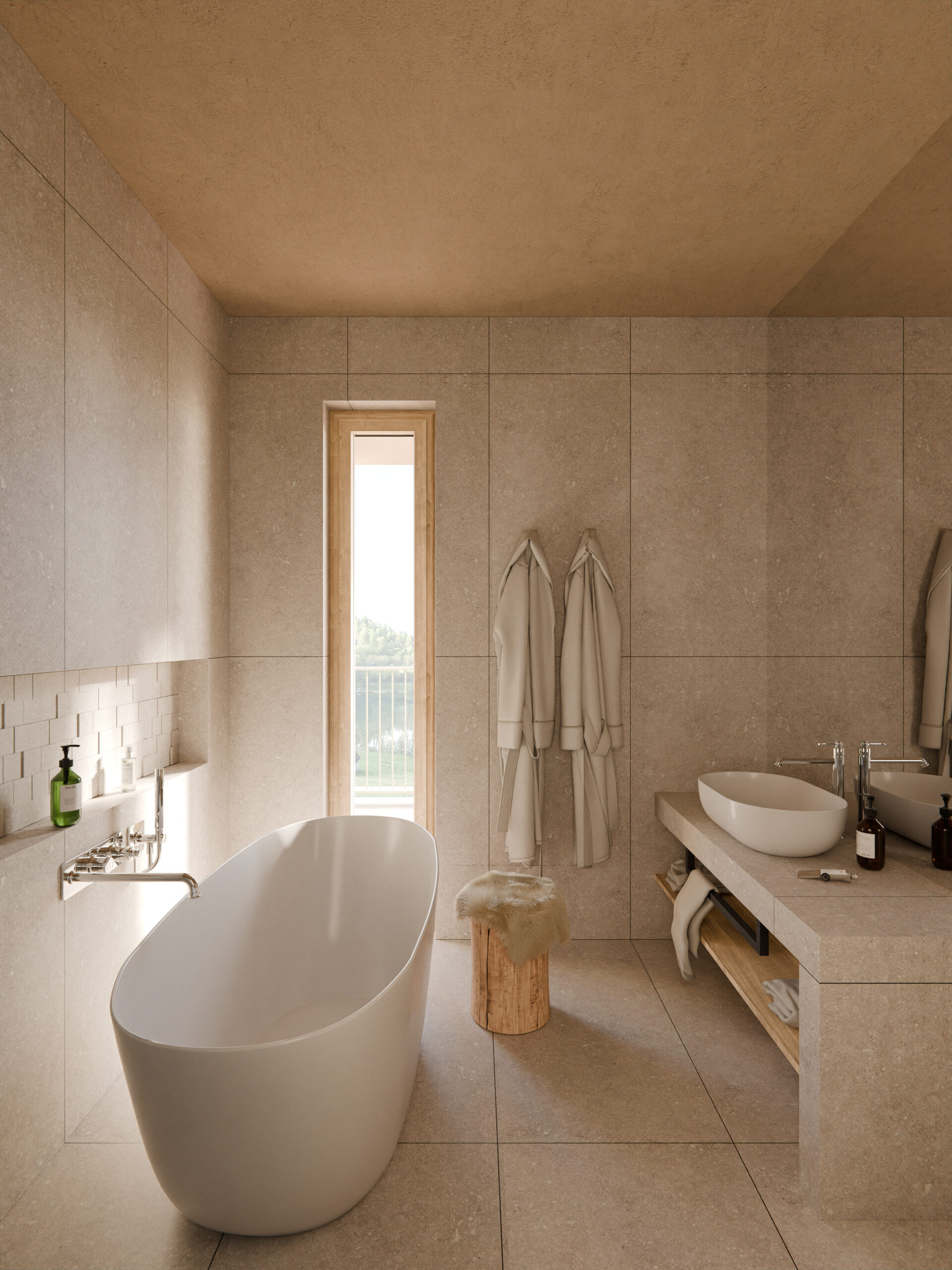
Premium room bathroom – visualisation. Author: Jaka Kordiš.
PROGRAME AND SPACES
Just over 1,000 m2 of thoughtfully designed space
The interior programe, in addition to hotel rooms with a central communal area on the upper floor, includes a reception, bar, restaurant, wellness facility, fitness room, conference room, and ancillary spaces. In total, 1,005 m2 of surface area united by a single design thread – rural minimalism, rooted in the local context of the Soca Valley.
A project with so many diverse spaces means an equal number of separate contractor lines and deadlines. The Lynx co-pilot brings them together into a single overview: every space has its designated responsible party, every deadline is visible alongside all the others. In this way, the investor manages the whole – not just the parts.

THE PROCESS
When the investor is an active participant
The project was developed in close collaboration with the investor, who was actively involved throughout the entire interior development process and made a significant contribution to shaping its final form. Hotel Tu’lie is conceived as a homely environment that creates new stories for its visitors, while telling its own.
At LynxCraft, we believe that this kind of approach – where the investor is not merely a signatory but an active co-creator – is essential for projects that genuinely reflect the identity of a place and the people behind it. Tu’lie is one such project, and at the same time a model example of why we developed the Lynx homebuilding co-pilot in the first place.
An investor who is actively involved needs a tool that ensures this involvement does not take more time than they have. The Lynx co-pilot ensures that the investor’s team always knows what has already been agreed, what is still pending, and what the cost implications of each open decision are. This enables an approach to construction that means less guessing and more control.
Construction is expected to conclude in the first half of 2026.